Health &
Lifestyle.
From sleep and emotion sensing to daily habit coaching, AI is fundamentally reshaping how products relate to the people who use them. We don't build dashboards that display data — we build companions that understand context, anticipate needs, and gently guide behavior toward better outcomes.
Multimodal perception of body and emotional states · Health as companionship, not clinical monitoring · Lifestyle products that continuously learn and adapt · Edge-first privacy for intimate personal data
The best health product doesn't lecture you about your numbers — it understands your rhythm and helps you improve it without thinking.
Why most "wellness" products get abandoned in a drawer.
Data display without understanding
Most health devices show you numbers — sleep score, heart rate, steps — but never explain what they mean or what to do about them. Users see data without insight, and insight without actionable guidance. The novelty wears off in weeks.
One-size-fits-all interaction
Every user gets the same alarm tone, the same notification style, the same generic "get more sleep" advice. Without personalization that adapts to individual rhythms, emotions, and preferences, the product feels impersonal and eventually irrelevant.
Emotion is invisible to the system
A stressed user and a relaxed user receive identical interactions. The product can't sense mood from voice tone, breathing patterns, or behavioral changes — so it misses the moments when it could be most helpful.
Privacy anxiety kills adoption
Intimate health data — sleep patterns, emotional states, biometrics — is exactly the kind of information users are most protective of. Cloud-dependent architectures create trust barriers that no amount of marketing can overcome.
Four capability layers for products that truly understand you.
Sleep & Emotion Perception System
- Multimodal state sensing: breathing rhythm, movement amplitude, posture, voice emotion
- Sleep stage trend analysis and circadian rhythm modeling
- Emotion, stress, and relaxation level classification models
- Personalized morning prompts, bedtime guidance, recovery suggestions
- Scenario-driven auto-adjustment of light, sound, and content
- Measurable improvement in sleep quality metrics
- Morning wake-up experience becomes gentler and more personalized
- Emotion understanding accuracy reaches actionable levels
- Daily recovery rhythm becomes more stable and predictable
AI Lifestyle Companion
- Personalized habit tracking: steps, posture, breathing patterns, daily rhythm
- Emotion trend alerts combining voice, facial, and behavioral signals
- Dynamic guidance for breathing exercises, meditation, and relaxation
- Intelligent daily routine scheduling and gentle nudges
- Lightweight personal and family health profiles
- Healthy habit adherence rate significantly improved
- Emotional fluctuations detected and guided earlier
- Users form genuine companion relationship with device
- Product retention and daily active usage notably increased
Emotional Interactive Experience
- Emotional voice interaction: tone recognition with emotion-matched responses
- Personalized sound, ringtone, and light atmosphere generation
- Context-aware content: morning phrases, bedtime stories, encouraging feedback
- Personality adaptation across different user types and preferences
- Day-night rhythm experience built through orchestrated light, sound, and content
- Device develops personalized character, driving higher interaction rates
- Active user retention measurably improved
- Clear differentiation from traditional devices as core selling point
- Stronger organic sharing potential in lifestyle contexts
AI + Smart Hardware Integration
- Edge computing: on-device motion, sound, and breathing recognition
- Cloud trend models and longitudinal user profiling
- Device-to-App experience design and seamless handoff
- Data privacy architecture and granular permission management
- Production-ready software stack for manufacturing handoff
- Device understands users rather than just displaying data
- Lifestyle experience feels smooth and natural
- R&D efficiency notably improved through reusable AI modules
- New products launch with differentiated competitive advantage
Products that understand how you live.
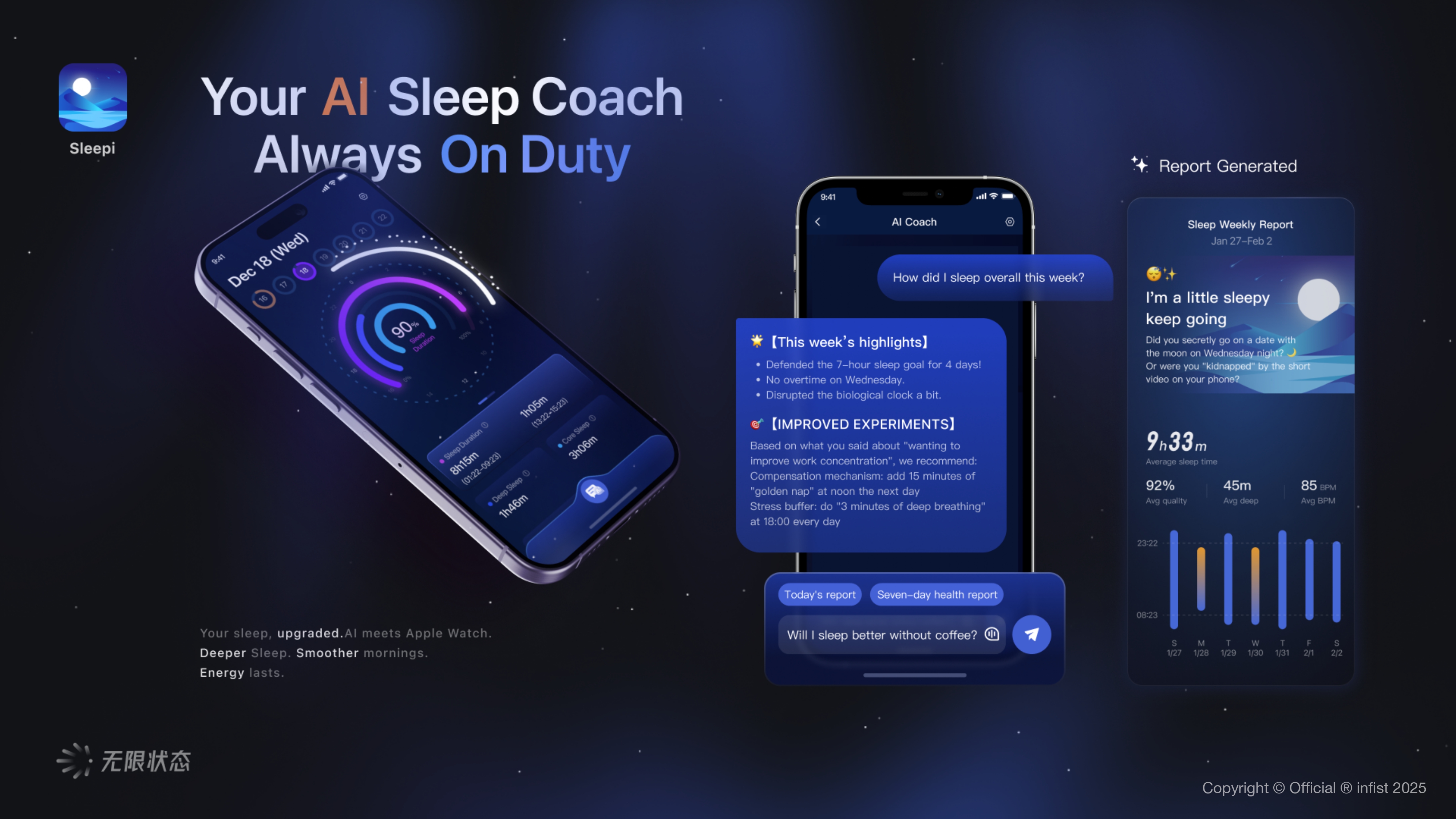
Sleepi — AI Sleep Coach
Apple Watch-based AI sleep coach that transforms biometric data into personalized sleep improvement through real-time analysis and behavioral recommendations.
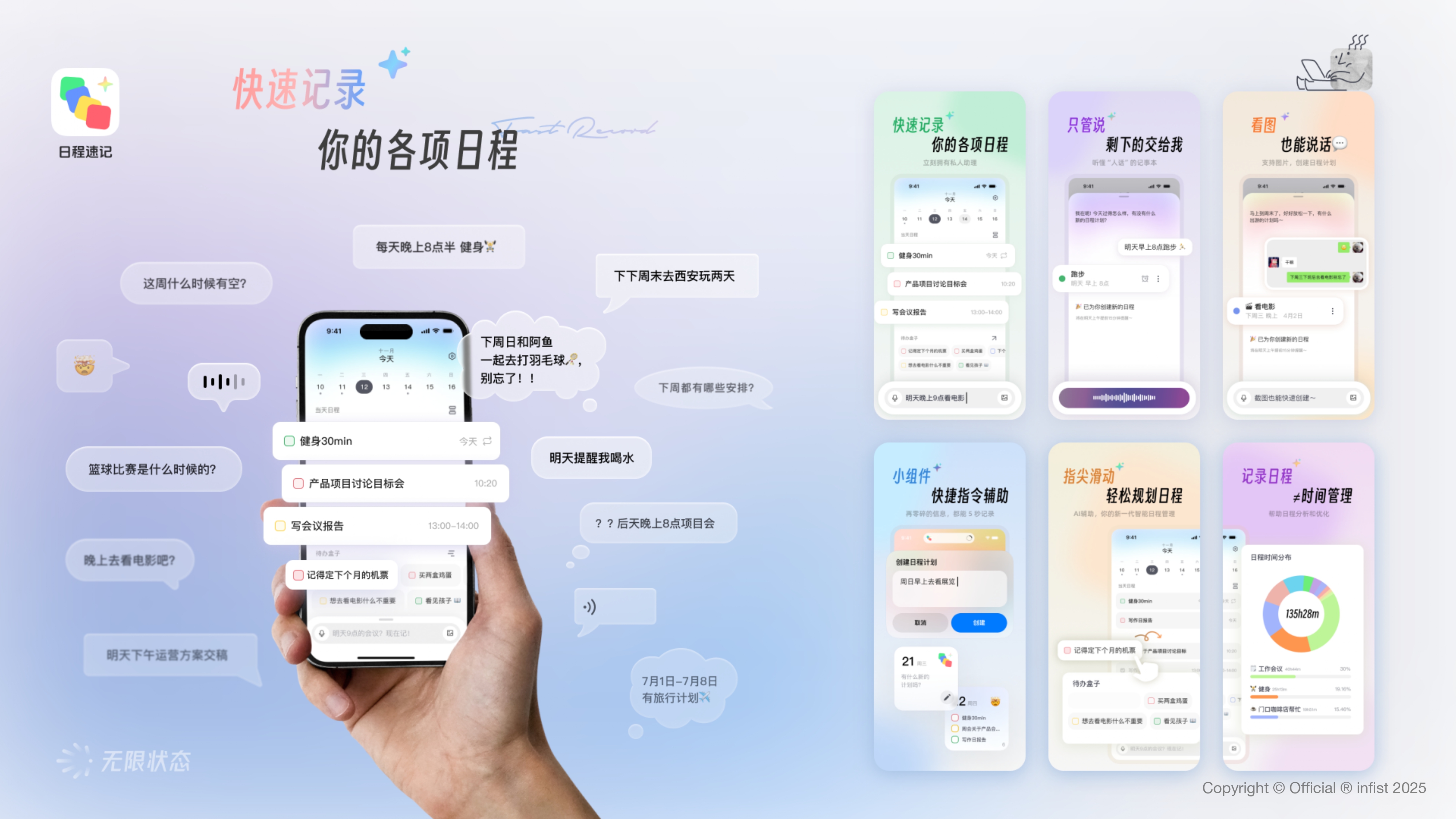
Daily Planner — Voice Calendar Assistant
Natural language calendar assistant — say one sentence to create a schedule, with intelligent intent recognition and multi-modal input.